
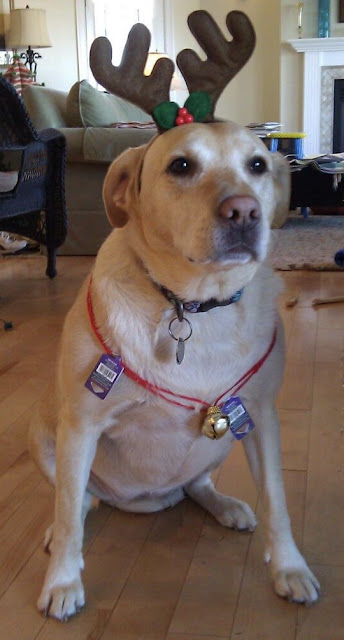
While I was in graduate school a handsome fellow graduate student who we all seemed to sleep with in our incestuous little group of psychology doctoral students, turned to me one day and said, "It's strange isn't it. We only know the world by the senses we have." That graduate student is now a full professor at a Georgia university, an expert on the neurology of the eyeball. But, I have never forgotten that. What would our world be like if we could sense differently. You might think this is an esoteric question that only amuses the nerdy and that might be true. A new podcast series that I listened too this morning, Chasing Life, tickled my nerdy bone and reminded me how much of the world we are clueless about because we don't even know it's there. This isn't like buying a VW and noticing how many VWs, particularly the yellow ones, are suddenly everywhere on the road. That's an attentional phenomenon. This is a physical reality which begs the question, do we have the sense organs to actually know our world? We don't have the ability to detect an elephant rumbling infrasonically or a bat sonar locating it's prey. Nor can we cue into the body heat of the surrounding animals like a rattlesnake can. These are unique umwelts, perceptual environments, that different animals live in. A human cannot sense the Earth's magnetic field that a newly hatched turtle uses as they migrate offshore. Different animals live in different umwelts and therefore experience the world uniquely. Consider something closer to home. I used to power walk with my dog around town at a pace that was optimal for my cardiovascular system with no mind really to my dog's needs and desires. The walk was all about me. These days my 100-yeal old arthritic dog (15 years old in human years) has been slowing down. Per vet's orders we have shifted to ambling around the neighborhood once or twice a day vs thirty minute treks. No longer do I tug on her leash breathlessly, "Keep going. Leave it." Nope. I now follow her stop-and-go lead as she embraces her daily sniff fest, smiling I am sure, like a canine finally understood. NOVA reports that dogs, who they call Olympic sniffers, can smell from 10,000 to 100,000 more acutely than you and me. Compare my visual capacity to see at 1/3 of a mile to my dog's visual prowess which stretches 3,000 miles. All this makes me wonder what it'd be like to walk around my neighborhood with my nose to the wet grass? Whatever is my dog smelling? What does she sense, taking a slow draw off a cold pile of dog poo left by the neighborhood dog who's the size of a small handbag and yaps constantly. I'm guessing she's nodding, "Yep, this is not evidence of the stupid black lab that barks like he's the town cryer." The podcast guest, Ed Yong, suggested we can never know what we don't know because we just don't have the organs for sensing. But I beg to differ. I never knew what happiness was until I changed in a fundamental way, like an island changes when both an earthquake and a tsunami reconfigure its shape and depth. Now I can feel happiness. Taste it. Smell it as a reality. My emotional sense organ has literally morphed. And so, in a smilier way but not really, I imagine a future when we will all be able to heighten our senses organs. Just think about blind people who have superior hearing or tetrachromat who sees lilac, yellow, green, and gray when she looks at a vase of white flowers. The ability is somewhere in there. We are sensing what we don't even know we are. Just because we can't see the future or even the capacity of our own brain, doesn't mean it won't happen and can't ever be.


Comments
Post a Comment